
Biography:
Born in Cologne
Born: 23/11/1958
Childhood and youth spent in Cologne and in various boarding schools
Musical education: Partly in school, mainly self-taught
1980-1981
New York – Los Angeles “Industrial Music Performances“ directed and played by
Andreas Thein. Back in Germany, Andreas writes his first single “1000 gelbe
Tennisbälle“ (1000 yellow tennis balls).
1982-1984
With a one-off performance, “Industriemusik für das tote Huhn“ (industrial music
for the dead chicken) featuring New York singer Julie Ashcroft, Andreas makes
himself known in the music and art scene. He collaborates with the painter
Gerhard Naschberger on several pieces, one of which is acquired by the museum in
Gent. In late summer ’83, Andreas launches the pop group PROPAGANDA together
with Ralf Dörper. After listening to their demo, Paul Morley and Trevor Horn
sign them to their label ZTT. The first single, “Dr. Mabuse“, is produced by
Trevor Horn and gains worldwide success.
1985-89
Andreas re-emerges with Kino, a band including Sarah Gregory (ex-Allez Allez)
and DJ Schengel, and writes the dance classic “Room In My Heart”. After a
meeting with Dieter Meier from Yello, Andreas’ next project Rififi employs
French enfant terrible and model Marthe Lagache (Jean-Paul Goude, Thierry Mugler)
for visual and vocal support. Barclay Records in Paris take them under their
wing and release the single “Accelere Mon Amour“, which enters the French charts
and becomes a club hit throughout Europe. At the height of acid mania, their
single “Dr. Acid & Mr. House” wittily caricatures the movement and does well in
the German singles charts. Andreas writes and produces “Hi Tek Lo Life” with
ex-Sex Pistols bass player Glen Matlock. Rififi bows out with a final single,
“Big Money Noi$e”.
1990-1999
Andreas writes songs for Boy George and continues working with Glen Matlock. He
comes up with a cyber character named “Otto Cruz”, which leads to a film script,
“The Eyes Of Otto Cruz”. He also writes the imaginary soundtrack “90 Miles To
Cuba”. Stephen Mallinder from industrial popsters Cabaret Voltaire lends his
voice. A meeting with David Cunningham, then a member of legendary art pop group
“Flying Lizards” inspires him to revive early German electronic music in the
tradition of Neu. Andreas and David Cunningham start recording for “Deutschland
1971”. After working up an extensive schedule in New York, Barcelona and Paris,
Andreas decides to go back to Germany, where he invests his experience in new
projects.
2000 – 2004
Andreas returns with Leeloo Kobayashi, a long-term project that encapsulates
various aspects and approaches of modern music and visuals. He is currently busy
finishing off the album „lovecosmodallas“.
APPENDIX:
Sales figures of recordings Andreas Thein was involved in:
PROPAGANDA: Total worldwide sales of both the single “Dr. Mabuse” and the album
“A Secret Wish”, including all remixes: 1.500.000 copies.
Kino: Total European sales for the single “Room In My Heart”: 150.000 copies.
RIFIFI: “Accelere Mon Amour”: 270.000 copies.
RIFIFI: Combined German and British sales total for the single “Dr. Acid And Mr.
House”: 600.000 copies;
German Top 20: 23/02/89: 17. NEW Dr. Acid & Mr. House – Rififi;
German Top 20: 30/02/89: 19. (17.) Dr. Acid & Mr. House – Rififi
Discography (post-Propaganda):
Kino: Room In My Heart (1985)
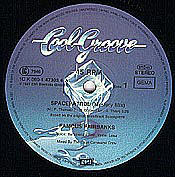
Famous Fairbanks: Space Patrol (1987) – vocals: Susanne Freytag; lyrics: Ralf
Dörper. Based on the theme music of the German science fiction TV series
“Raumpatrouille”. Keyboard and drum sounds are somewhat reminiscent of
Propaganda. Susanne is listed as “Barbarella”.
Rififi: Accelere Mon Amour (1987)
Rififi: Dr. Acid & Mr. House (1988) – Ralf Dörper guests; Top 20 hit in Germany
Rififi: Theme From Shaft ’89 (1989)
Rififi: Big Money Noi$e (1990)
Lunchbox: Eastern Influence (1995)
Great thanks to Andrea sfor his support and patience. The interview was done at
Jan/2000.




P-Fan: What was your musical and artistic past before you met Ralf?
AT: I had started to create and sequence bizarre sounds on my Korg MS-20 very early on. On top of these, I had read words from Mickey Mouse books and Kurt Schwitters. All that put together may have sounded rather weird. Finally, I ended up in Los Angeles and did a few performances. It was there that I met musicians such as Kurt Dahlke from Der Plan and Stephen Mallinder from Cabaret Voltaire, both of whom I worked with later on.
P-Fan: You were known as “das tote Huhn” (the dead chicken). What inspired and characterised the performance?
AT: “Industriemusik für das Tote Huhn” was a one-off performance that involved eight musicians on a rather smallish stage at the Blue Shell in Cologne. Originally we wanted to add a soundtrack to a super8 film which featured the wife of a farmer in Hungary slaughtering a chicken. At the time, New York singer Julie Ashcroft happened to be in Düsseldorf and agreed to do the vocals. It was a unique experience, especially because every musician contributed their own individual style. I recall a very bizarre mixture…
P-Fan: Was there anything before “das tote Huhn” that people might be familiar with?
AT: No. As I said, it was a one-off performance.
P-Fan: How did you and Ralf meet?
AT: At a Kid Creole & The Coconuts gig in Cologne. Alan Vega from Suicide was also on the bill that night. Ralf and I got on like a house on fire and met up soon after. We immediately launched Propaganda.
P-Fan: What were the first steps of your musical experiments like? Did you already work towards song structures and titles or were your early efforts of a predominantly experimental nature?
AT: Naturally, we experimented in order to find a direction. As far as I’m aware, we found it rather quickly. The first titles we had were “Disziplin”, “Sünde” and “Doppelgänger”, amongst others.
P-Fan: When did you know that you were going to
release a record together?
AT: Right from the beginning.
P-Fan: Some of your early pieces were called
“Disziplin” and “Sünde”. Why weren’t they released at the time?
AT: No idea. Perhaps Trevor Horn considered them too provocative.
P-Fan: Your appearance on “The Tube” was announced
as “ABBA on Acid”. Was this your own original concept?
AT: It sounds good but doesn’t bear any resemblance to our original idea. The British are very fond of labels. Quite frequently, this results in alternative ways of perception.
P-Fan: It was your first performance in front of an
audience. What kind of emotional experience do you associate with it?
AT: I remember I felt as if I was in trance. I was terribly nervous, everything seemed to go past me.
P-Fan: How many appearances did you have on “The
Tube”? Was it one or two?
AT: As far as I’m concerned there was only one.
P-Fan: You never really gave away too much in
interviews, which enraged quite a few journalists at the time, who in turn
channelled their frustration into biting comments and generally described you as
arrogant. Why did you employ such a strategy?
AT: I personally think it’s more interesting to say less because you open up certain possibilities for interpretation. As you know, some journalists don’t agree with that. If you don’t play their game, you’re considered arrogant, but I can live with that.
P-Fan: In a 1983 interview for German radio station
SWF Peter Illmann associated you with the Hitler Youth. He said you looked like
a cross between the Hitler Youth and a shooting club. How come the media had
such a wrong image of you?
AT: This is due to a rather fierce performance on “Showbühne”. The stage set was entirely left to our own imagination and we came up with something that was interpreted as fascist. Susanne and Claudia stood on pulpits that were enhanced with our P-logo and surrounded by plenty of microphones. The whole scenario had the atmosphere of an old Fritz Lang movie and was falsely interpreted as fascist, only because we used the fanfare of the “Fox tönende Wochenschau” (Fox Movietone News) as a stylistic device. This and the fact that we were all dressed in black and played in such an esteemed Munich venue as the Deutsche Theater probably proved a little too much for people as hip as Peter Illmann. He was one of the people who booed us at the time. Years later he changed his mind and considered our music resourceful and ahead of its time.
P-Fan: For Alfred Biolek’s “Showbühne” you and
Susanne were cut from the final version of the programme. Why did that happen?
AT: The tabloids in Munich had described us as neo-nazis because we allegedly dressed in black leather. The only leather I wore on the night were my shoes and my cap. This incident was followed by some internal dispute within the Bayerische Rundfunk (broadcast corporation in Bavaria) where the chief editor observed our rehearsals for four days and eventually distanced himself after finishing the recording.
P-Fan: Did you participate in any other promo activities with Ralf and Susanne where similar things happened?
AT: There were some other bizarre situations. Again it was in Munich where we got invited to do a photo shoot for a so-called “Homestory” for the German youth magazine “Bravo”, which we declined right away. Completely out of the blue, the editor then suggested we hire a tram to take us around Munich in order to take pictures at some of the city’s more central sights. When the tram had reached a bridge, Susanne said that we were about to get off there and that the only photos we were going to do were going to be ones at the bridge. At first, the crew reacted rather coolly but afterwards they did like the results. We just knew exactly what we wanted.
P-Fan: Where else in Europe did you promote “Dr.
Mabuse”? Did you witness any other interesting or bizarre situations?
AT: We had a brilliant time in Barcelona. We had been flown in from London and were booked to do a TV performance and some interviews. We were chauffeured from the airport to the Ritz hotel and just couldn’t believe it! Spain wasn’t a territory where we were selling in huge quantities. However, the Spanish treated us like kings. Something on that scale simply hadn’t happened to me before. It was one of my favourite experiences of that period.
P-Fan: What was your involvement in terms of “Dr. Mabuse”?
AT: I wrote it with Ralf. When we recorded it in the studio, we made sure that Trevor Horn didn’t change it too much.
P-Fan: Many people think that you owe your success solely to Trevor Horn and his production. In what way has he influenced or shaped “Dr. Mabuse” and how different is the demo version from the final studio master?
AT: I don’t care what anybody thinks. Of course, Trevor has had an influence, after all he recorded a total of four versions. However, without us there would have been no song. Without wanting to sound diplomatic, I should say that everyone contributed in equal measure.
P-Fan: Was a record contract as tight as the one
you signed with ZTT the only way to become successful at the time?
AT: It depends on what kind of success you want to achieve. For the success we were after there was no alternative.
P-Fan: You left the band some time in between the
release of “Dr. Mabuse” and “A Secret Wish”. When exactly during that year did
you leave and why?
AT: I left in November ’84 because I was fed up having arguments with Trevor Horn, who constantly shouted abuse such as “fucking artist leave the studio”. I just had enough of this pompous busybody. None the less, he has produced some fantastic hit songs.
P-Fan: What were your other contributions on the
album?
AT: No comment.
P-Fan: In the second video for “Dr. Mabuse” your
sixth member is a drummer called “Weet”. Do you remember his full name?
AT: No, I don’t.
P-Fan: Were you involved in the court case against
ZTT or was Propaganda a thing of the past as soon as you had left?
AT: For me, the band was history as soon as I had left.
P-Fan: What happened after you left Propaganda in November ’84 until your next release in ’86? Which places did you visit?
AT: I felt quite low for a while because I couldn’t understand how it had come to this. I flew to Barcelona several times in order to find some inspiration. Gaudi, Dali, Miro and some beautiful girls were exactly what I needed.
P-Fan: Your first post-Propaganda record was Kino’s “Room In My Heart” in
1986. Sarah Gregory, wife of Glenn Gregory from Heaven 17, stood in on vocals.
How did you meet her?
AT: I met her through Glenn, whom I had known for a while.
P-Fan: “Room In My Heart” was popular enough to be
given the Razormaid remix treatment. Did that annoy you?
AT:
On the contrary. I’m generally flattered when other people show interest in my
work.
P-Fan: “Space Patrol” by Famous Fairbanks is a
fantastic song that recalls the old Propaganda magic circa “A Secret Wish”. Was
that what you were trying to achieve in 1987?
AT: Not really. I just followed my own style, which usually reflects on the projects I work on.
P-Fan: How did you come to produce “Space Patrol”?
AT: I’ve always been a big fan of “Raumpatrouille Orion” (60s sci-fi series on German TV).
P-Fan: I’m positive Barbarella is a pseudonym for
Susanne. Why does her real name not appear on the cover? Or was it someone else
after all?
AT: Who knows!?
P-Fan: I have noticed that it is movies in
particular that inspire your songs. How come?
AT: I have always been influenced by movies because they can really trigger the imagination.
P-Fan: The first Rififi single was “Accelere Mon
Amour”, which was sung by Marthe Lagache. Can you tell me a little bit more
about her?
AT: Marthe was an extraordinary person, both as a captious, much-in-demand model from Paris and in her role as an extravagant shoe designer. She was capable of transforming a hopeless situation such as our appearance on “Formel Eins” (80s chart show on German TV) into an amusing experience. When she didn’t feel like answering a question she simply said: “Oops, Andreas! I think I forgot my lipstick in Paris!” She was an incredibly charming character.
P-Fan: The main hookline in “Accelere Mon Amour” is
the theme from “Mission Impossible”. What inspired you to use it? Or did you
just watch too much television when you were young?
AT: I DID watch a lot of television! I vividly remember the magic roundabout and “Turnikuti, Turnikuta, the Zebulon is here again!” I also remember “Fury”, “Bonanza” and particularly “Belfigore”, the phantom inside the Louvre.

P-Fan: Why did you thank Dieter Meier from Yello on
“Accelere Mon Amour”?
AT: Dieter Meier was my mentor at the time. He is a fantastic storyteller and a very noble human being. He also initiated the first meeting between Marthe and myself.
P-Fan: There was also a remix of “Accelere Mon
Amour”. Who did the remix and do you rate it at all?
AT: The remix was done by Blue Weaver and myself at London’s Abbey Road studios. All we had was one long night, tons of studio equipment and very good and expensive wine supplied by our French record company. As it happened, “Accelere Mon Amour” made the European Top 30.

P-Fan: As previously with Famous Fairbanks, Ralf
also wrote the lyrics for Rififi’s “Dr. Acid & Mr. House”. This would suggest
you kept in touch, at least for a while. Was there anything else you worked on
together?
AT: We are still in touch! There are lots of nice little anecdotes we would rather keep to ourselves.
P-Fan: How did you arrive at Rififi’s “Dr. Acid &
Mr. House”? Ralf told me he had been inspired by the burgeoning acid house scene.
What was your inspiration?
AT: Ralf was greatly enthusiastic about the scene and supplied me with the most important tracks. Ultimately, that’s how I got infected with acid mania.
P-Fan: Who’s that person named Jazzy M. who gets a mention on “Dr. Acid & Mr. House”?
AT: He was the svengali of the acid house scene.
P-Fan: In terms of sales, how successful was “Dr.
Acid & Mr. House” in Europe?
AT: I have difficulty giving you the exact sales figures. I can tell you though that it went Top 20 in Germany and that it reached a higher chart position than “Aciiiid”, which was more or less the hymn of the acid house scene.
P-Fan: The follow-up singles struggled to repeat
the success. What do you think were the reasons behind the diminishing returns?
AT: It mainly had to do with myself. At the time, I just didn’t feel like working.
P-Fan: Many musicians have covered “Theme From Shaft”. Why did you choose such a risky and rather unattractive song as the follow-up when you could have released another acid house track instead?
AT: Because I didn’t want to. Besides, “Shaft” is one of my all-time favourite songs. Unfortunately, I failed to put the right spin on it.
P-Fan: The last Rififi single “Big Money Noi$e” was
published by a little-known label called Dino Music. How come?
AT: That was actually quite funny. The fact that the label usually made its money from German folk music releases as well as employing Ingmar Koch as A&R manager, who now works for Air Liquide, made the deal attractive for me. Also, they supplied us with the funds that were necessary to make a video in Barcelona and to do post-production in London. It was fantastic. Unfortunately the single flopped, but at least we had good fun.
P-Fan: Who is Tavernier?
AT: A very complex and difficult person with an incredible voice. I’m not going to say anything else.
P-Fan: “Big Money Noi$e” was recorded in collaboration with Matiz. Is that the guy from U96?
AT: Yes.
P-Fan: You lived in New York for quite some time.
What kept you occupied?
AT: Very little in professional terms. I was mainly there to party and fall in love.
P-Fan: During that time, there was talk of a
project called Lunchbox and a track, “Eastern Influence”, which was never
officially released.
AT: The song had a rather unusual production and was only released in the US, on the Smile label.
P-Fan: Are there any other production credits that
I might not be aware of or that aren’t in your discography?
AT: I’m sure there are some production credits you wouldn’t know about. But let’s talk about them another time.
P-Fan: What are you doing nowadays? Are you still
active in the music business?
AT: As we speak, in April 2003, I’m busy setting up my own label and I’m also planning to release the Leeloo Kobayashi record in May.
P-Fan: Do you now consider Germany your permanent
residence or are you still tempted to live abroad?
AT: At present, I’m living in Cologne concentrating on my new project.
P-Fan: Will you be doing the marketing over the
Internet?
AT: I think so. Fans will be able to order the Leeloo Kobayashi CD from my label. Also, there will be the possibility of special downloads. I’ll keep you posted.
P-Fan: Will you be playing any live dates?
AT: I’m hoping to be able to play some gigs in autumn 2003, possibly through some live streaming on my website.
P-Fan: Thanks for taking your time. Good luck with
Leeloo Kobayashi.
(Courtesy of Andreas
Thein, I was lucky to listen to a promo version of the album. There are many
interesting songs on it.
Overall, it’s an eclectic mix of sound effects and song ideas. More info when
the record is released.)
Many thanks to Andreas for his cooperation and for taking the time to do the interview and biography.
A VERY SPECIAL" THANK YOU" TO MICHAEL LUDES (UK) for the translation.
All contents of this Interview Copyright © 2003 Karl Hirschberger
& Michael Ludes, All Rights Reserved.
In particular it is not allowed - also in parts - to reprint,
publish in the Internet and copying to Data Storages like
Audio CD, CD-ROM, DVD-ROM etc. only with previous written agreement of the author.
© 2004, Karl Hirschberger